Crestline Chamber of Commerce....
Each year we start at zero for Jamboree Days. We fundraise and get sponsors for it. We are already in the process of funding for the 2026/2027 year.
-
Jamboree Days is funded through fundraising and sponsorships, not TOT.
-
TOT funding is our marketing & advertising budget. Ex. Social media posts and social media manager, websites managing & maintenance, print media (posters, banners, fliers, beer coasters, etc).
-
We had a 5 year contract with the County for the TOT funding and got a 2 year extension on it, making this year the last year. We knew for years there was a possibility the funding could end and have been planning accordingly.
-
We are currently negotiating with the County for the future.
TOT can only be used for advertising and marketing. So for example we prolly won’t do radio ads for Jamboree Days next year as that is thousands in cost. TOT covered that. The Crestline Magazine though we will continue with cause the cost of the ads placed offset the costs of publishing. We decided to not mail that this year to see how it affects the distribution as TOT funding can cover the 5k to mail to each PO Box on the mountain.
We have been looking at ways this past year to reduce where we can in preparation of possibly losing the funding. The one thing that we’re currently looking at is creating like 501(c)3 for the chamber so we can go after grants to help subsidize advertising and marketing costs.
Lake Arrowhead has been actively pushing for the last two years in anticipation of the TBID (a new resort fee tax) that affects lodging and outdoor recreation like Lake Gregory fees, Snow Valley and SkyPark. TBID has no restrictions on how the funding is spent. You can go for assets, personnel, rent, etc. If they get this pushed through it will affect Running Springs through Crestline.
Our mountain communities face unique challenges, and recent federal policy decisions are adding new pressures to the people and services we depend on every day. Funding reductions, proposed public land sales, and changes to healthcare reimbursement are creating uncertainty for rural communities like ours.
These decisions have real local consequences. Mountains Community Hospital is working to modernize its facilities while facing reduced federal healthcare funding. Community traditions like Jamboree Days and its fireworks celebration rely on financial support that has become increasingly difficult to secure. Proposals to sell public lands could permanently change the forests and open spaces that define our mountain lifestyle. At the same time, local governments continue to struggle with limited resources to maintain the services our residents need.
This page explores how these issues affect the San Bernardino Mountains and what residents can do to stay informed, speak up, and help protect the community we call home.
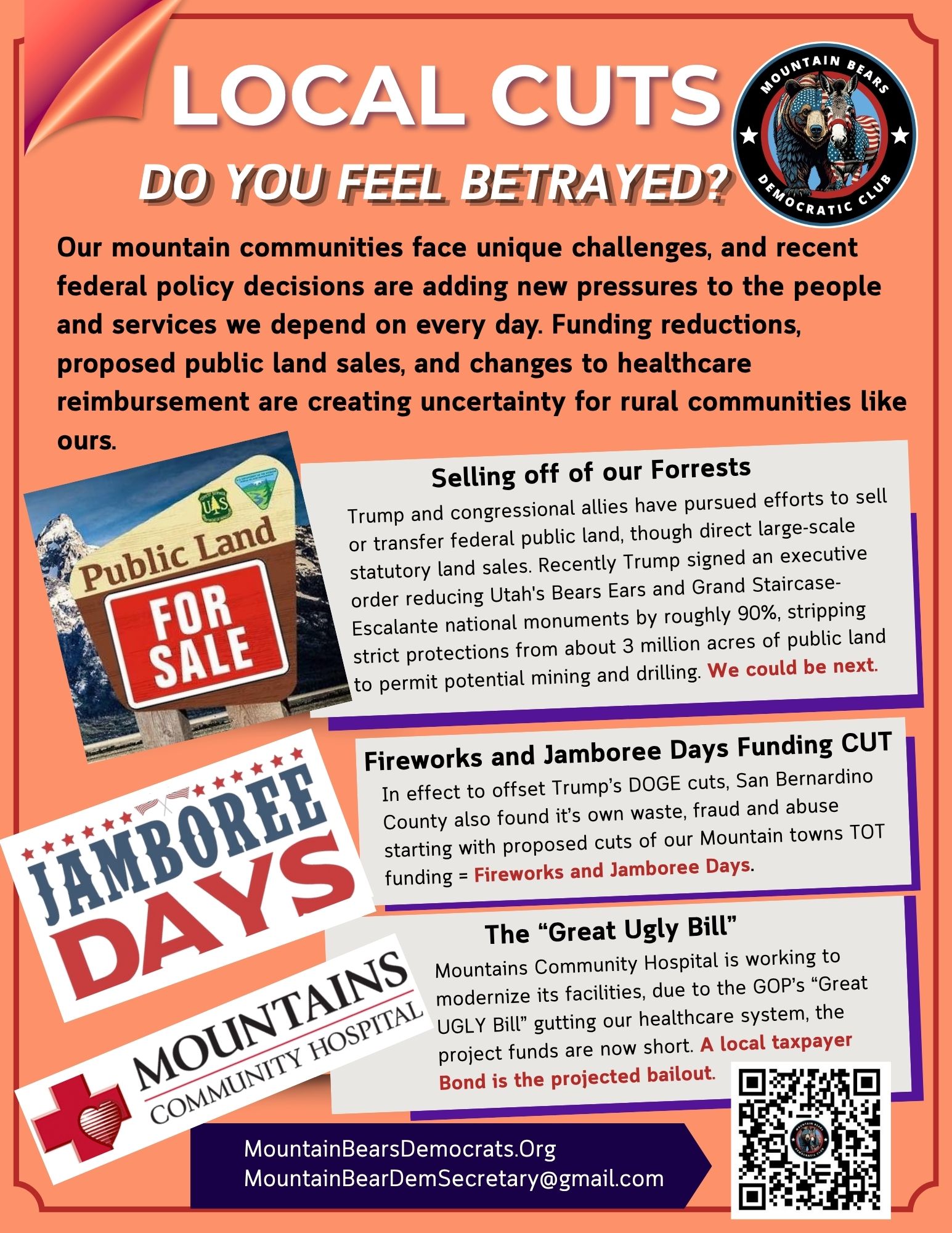
Betrayed by:
"The Ugly Bill"
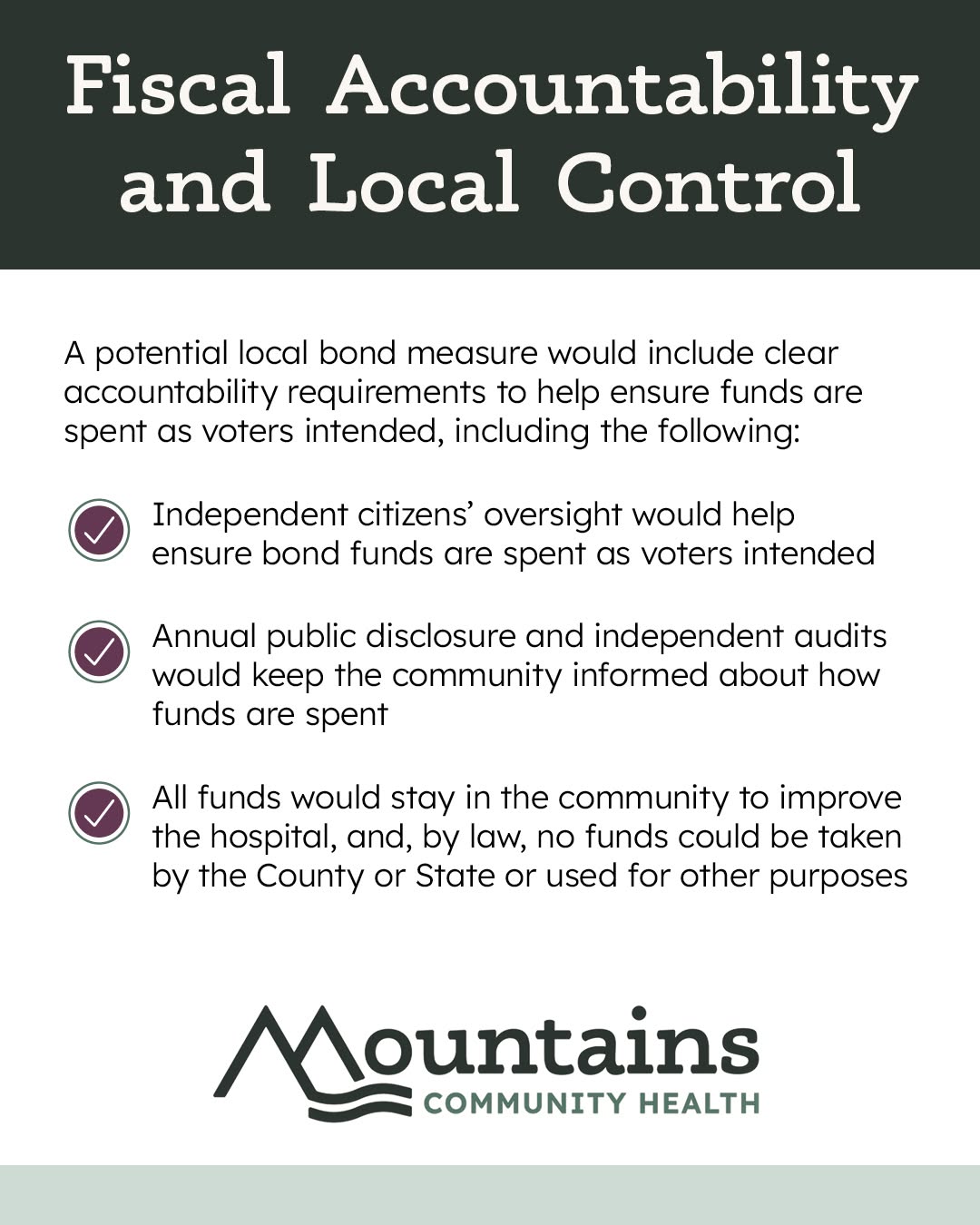
The Mountains Community Hospital Board of Directors is considering placing a local bond measure on the November 2026 ballot to help repair, upgrade, and expand hospital facilities to meet current standards and community needs. By law, any potential measure would be subject to strict fiscal accountability. To share your priorities and feedback, please complete our community survey by visiting Click HERE
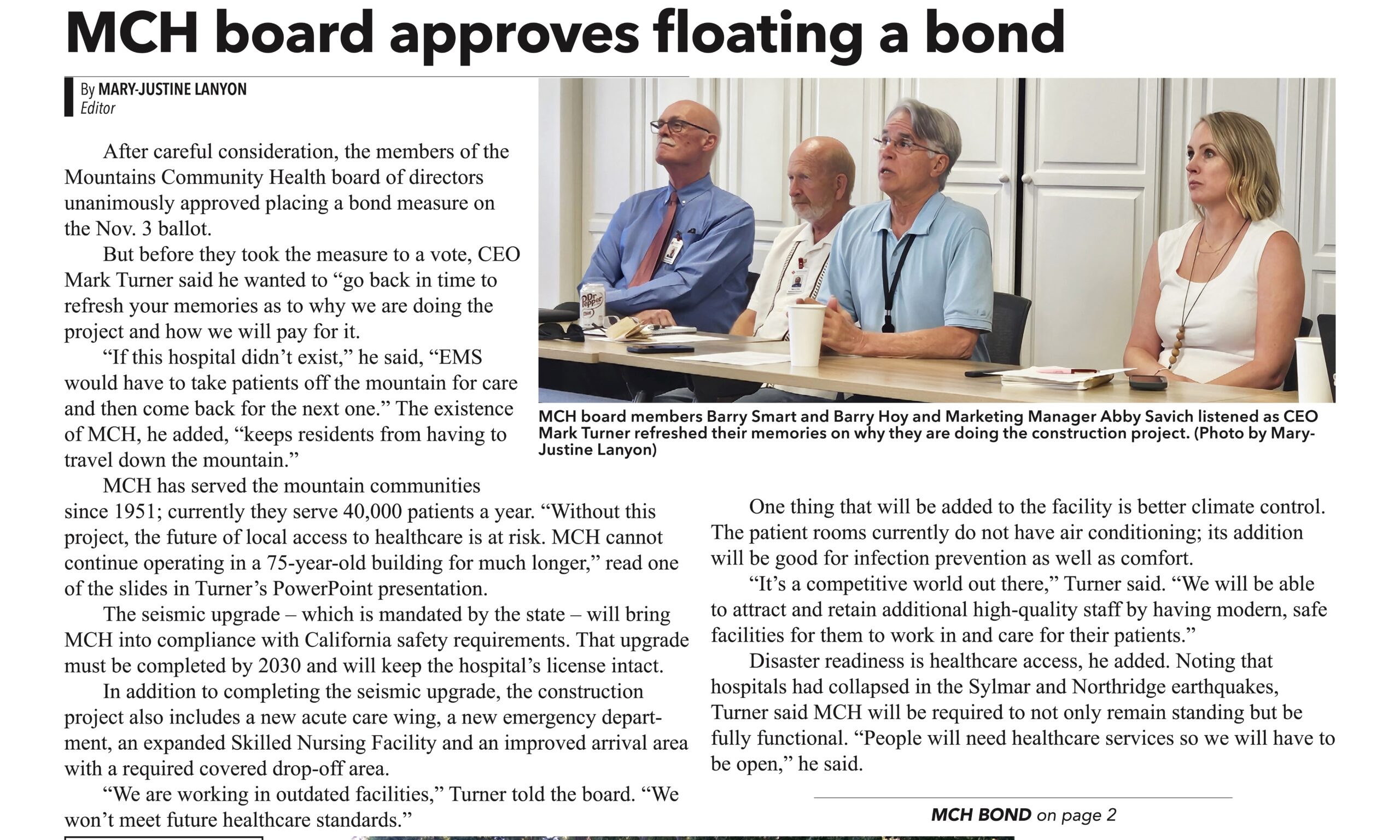
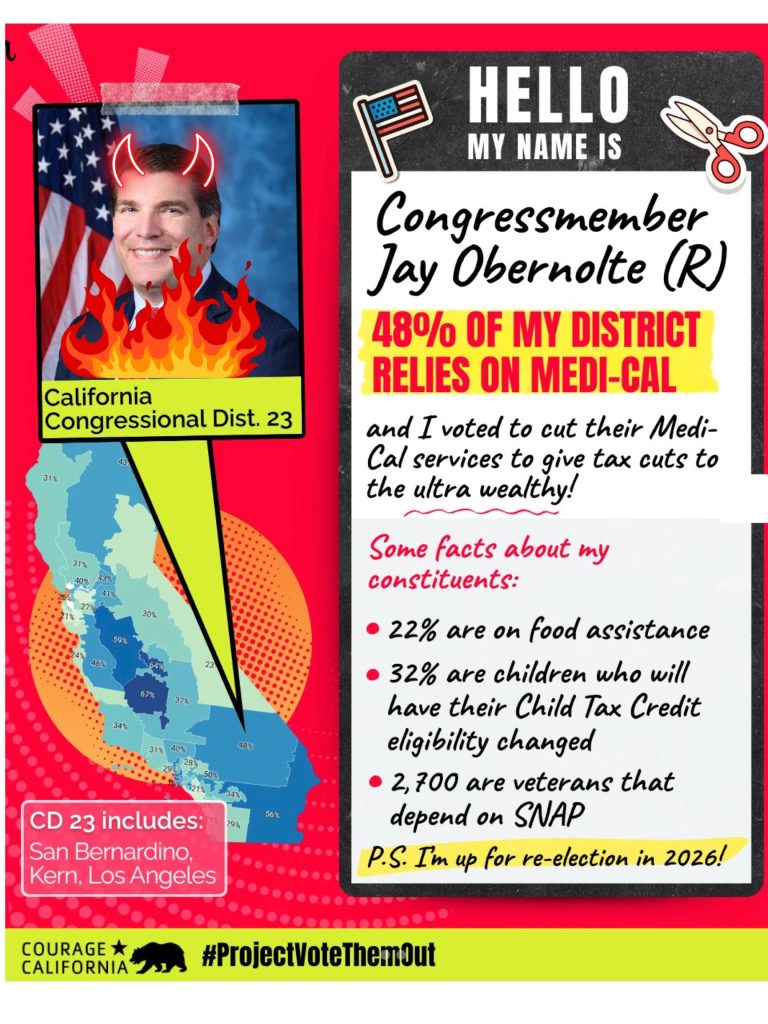
A quick update on the bond measure: The Mountains Community Hospital District Board has voted to place the bond measure we discussed on the November 3 ballot. As a reminder, the measure would help repay the $48.5 million USDA loan supporting our $72 million hospital expansion and modernization project. As we discussed, we had a plan in place to finance the project. However, changes to Medi-Cal funding under the OBBBA are expected to reduce our annual revenue by approximately $4 million—more than our current bottom line—and put us into a negative cash flow position. This makes the bond measure an important part of our plan to ensure we can continue moving forward with the project. The project includes mandatory seismic upgrades, a new emergency department, a new acute care wing, and an expansion of our skilled nursing services. This is critical work to ensure that our hospital remains here for our community when we need it most—during disasters and for generations to come.
Willow Creek at Risk!
By Bob Sherman (2026-0913 posted)
significant violation on a series of adjacent lots approximately 0.6 miles North-north-east of the intersection of North Bay Road and Hwy 173 in lake Arrowhead. There, within the watershed of Willow Creek, there has been unpermitted clearing of forest and complete removal of ground cover that have occurred on more than 10 acres (not yet formally determined) within land adjacent to the Willow Creek and its associated riparian banks and wetlands areas. (Note- Riparian areas act as "critical green infrastructure", serving to protect water quality and aquatic & terrestrial biodiversity).
- San Bernardino County Code Violations: Land disturbance took place without approved grading permits, erosion control plans, environmental reviews, or protections for the native tree canopy. The County agency with jurisdiction is Land Use Services, hereafter abbreviated as LUS.
- Fish and Game Code Violations: Disruption of natural stream channels, banks, and riparian vegetation occurred without a required Lake and Streambed Alteration Agreement.
- Water Code* Violations: (*the Lahontan Regional Water Quality Control Board, hereafter abbreviated as LRWQCB): the unpermitted grading and soil destabilization was in violation of standards that protect water quality in state-regulated waters. (Note- There may be other state regulatory agencies, such as CalFire, that may, yet, become involved.)
Department of Land Use Services (LUS), calling for issuance of a Cleanup and Abatement Order alongside a technical information order for certified engineering and ecological assessments. Specifically, it called for:
- Full Disclosure of Records: Immediate access to all project-related documentation, including permits, site plans, inspection reports, and all CEQA-related environmental documents.
- Verification of Agency Consultation: Confirmation on whether the County has consulted with the California Department of Fish and Wildlife (CDFW) and the Lahontan Regional Water Quality Control Board regarding the project’s impact on Willow Creek.
- Transparency on Mitigation: Disclosure of any existing correspondence between the County and the property owner regarding mitigation measures for environmental impacts, specifically habitat loss and sediment discharge.
- Initiation of CEQA Review: Formal confirmation that a CEQA review process has begun, including copies of any completed documents or a specific timeline for its completion.
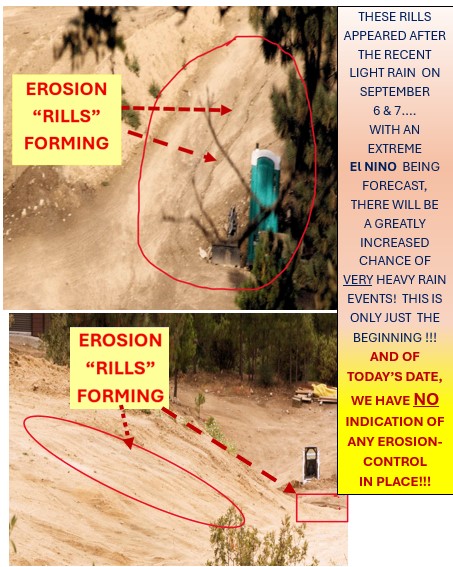
Timeline and Ecological Vulnerability: over three and one-half months have passed since the initial complaint without a complete analysis of ecological damage (it has not even been established if Willow Creek itself has been impacted-- leaving the area vulnerable and lacking information on erosion controls as El Niño rains arrive due to
institutional failures. (Note- the rains on September 6 and 7 – most definitely linked to El Nino- have already resulted in the advent of erosion, which will only get worse,unless best-management-practices for erosion control are immediately mandated and enforced by the San Bernardino Land Use Services Department).
Arrowhead, for sixteen years, I served administering the Massachusetts Wetland Protection Act. I have a B.S. from the Univ. of Massachusetts in Wildlife Management and was nationally certified as a Professional Wetlands Scientist. For more information contact Bob at silabob@gmail.com .
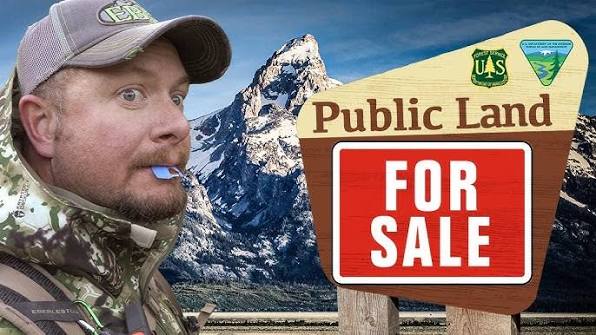
Trump's Drilling Attack on California Public Lands
The Trump administration has acted to eliminate protections from more than 86 million acres of U.S. public lands, prioritizing industrial extraction, mining, and fossil fuel development over conservation. These sweeping changes target national monuments, endangered species habitats, and multiple-use public land regulations across the American West and Alaska.
- National Monuments and Land Reductions
President Trump signed proclamations shrinking Bears Ears to just 8.9% of its prior size and Grand Staircase-Escalante to 9.7% of its prior size, totaling nearly 3 million acres of culturally and ecologically vital red-rock landscape. The reduction opens iconic terrain containing ancient cliff dwellings and potential mining sites to industrial development. - Broader California Public Lands Actions
Oil and Gas Leasing: Federal initiatives have pushed to reopen massive acreage of public lands and mineral estates across California to oil drilling and fracking, overriding state-level buffer laws and environmental safeguards. National Policy Shifts: Efforts to scale back protections on federal monuments and alter forest service management continue to draw pushback from regional conservation coalition.
For more information: Click HERE
The Transient Occupancy Tax (TOT)
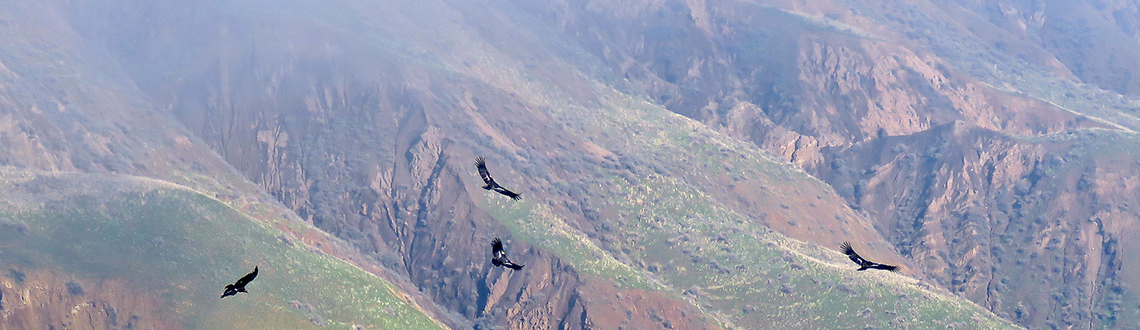
The Transient Occupancy Tax (TOT)—often called a bed tax or hotel tax—is charged on short-term lodging stays of 30 days or less. It is explicitly designed to offset the heavy infrastructure and service demands caused by visitors in high-tourism and mountain regions. When funding from TOT is cut or diverted, destination communities face acute strains.
Purpose and Function of TOT in Mountain Towns
*Infrastructure Relief: Funds local road repair, snow removal, and traffic management.
*Public Safety: Supports increased 911 dispatch, paramedic availability, and firefighting/wildfire prevention.
*Community Upkeep: Pays for trash removal, trail rebuilding, and park maintenance.
*Local Balance: Offsets the hidden costs that short-term visitors place on small local workforces and municipal systems.
Impact of Funding Cuts
*Deteriorating Infrastructure: Roads and public facilities wear down faster under heavy tourist traffic without enough repair money.
*Budget Shortfalls: Local governments struggle to maintain basic public safety and emergency response levels.
*Strained Housing: Programs aimed at workforce and affordable housing lose critical dedicated revenue streams.
Obernolte’s Voting Record:
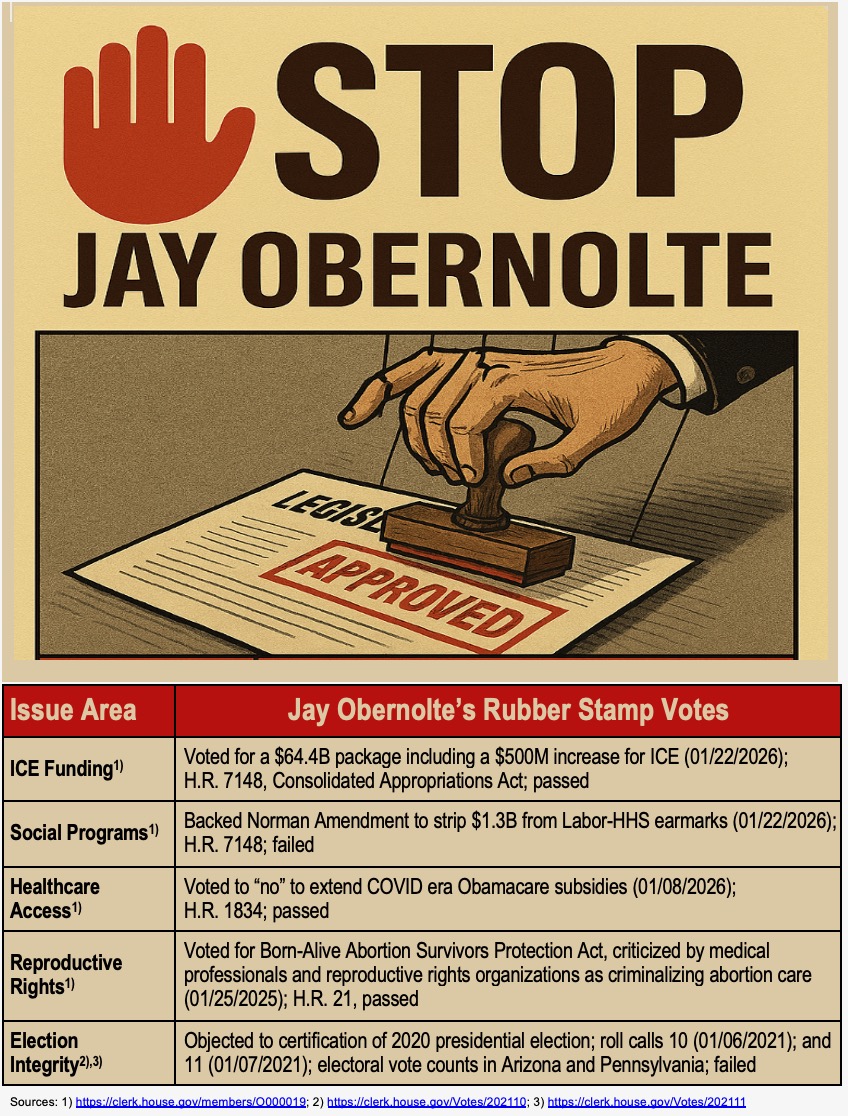
99.2% Party
Against Majority 3
Recorded Votes 371, Missed Votes 3
Links to Obernolte’s record:
https://accountability.gop/profile/rep-jay-obernolte/